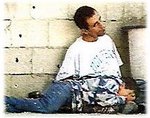
1) Which country in the Middle East has undeclared Nuclear Weapons?
2) Which country in the Middle East has undeclared biological and chemical capabilities?
3) Which country in the Middle East has no outside inspections?
3) Which country jailed its nuclear whistleblower for 18 years?
The answer to all of these questions is Israel
This video has particular relevance in light of the enormous pressure being currently placed on Iran to abandon its nuclear ambitions. This is just another example of American double standards when dealing with Israel.
Enjoy the videos
Monday, September 21, 2009
Israel plans to attack Iran

Israeli officials said on Monday that it is unlikely a military strike against Iran's nuclear facilities and that all options were still on the table within the framework of self-defense, comes following the statements of Russian President Dmitry Medvedev That Israel will not attack Iran.
The chief of General Staff of the Israeli army, Lt. Gen. Gabi Ashkenazi said in an interview with Israeli Army Radio in response to the question of whether Israel could attack or not, if you feel threatened by Iran, "Israel has the right to defend itself and that all options remain on the table."
For his part, "said Danny Ayalon, Deputy Israeli Foreign Minister, Medvedev said that the words certainly not a guarantee, he said, adding that" with all due respect I do not think that Russian President authorized to speak on behalf of Israel and of course do not rule out any option against Iran. "
The Russian president said in an interview with the channel "CNN" American TV broadcast on Sunday that Israel is not planning a military strike against Iran, terming the attack as "the worst thing imaginable."
Israeli pledge
Medvedev said he received Israeli assurances not to attack Iran (French - Archive)
Medvedev stressed that the Israeli president Shimon Peres Pledged during a meeting with him in August last year when he visited him in Sochi that Israel does not intend to any strikes on Iran, saying, "We are a peaceful country and will not do that." As we all know its a lie and Israel will attack Iran to force the American fight their war and clean up their mess as usual.
It was such an attack would lead to a "humanitarian disaster and a huge number of refugees from Iran and the desire for revenge, not only of Israel to be frank, but also from other countries."
He said Medvedev, according to a transcript of the interview distributed by the Kremlin, "but my colleagues in Israel have told me that they do not intend to act in this way and I trust them."
The news has spread about the visit of Israeli Prime Minister Benjamin Ntiniaho This month and perhaps other officials to Moscow to press Russia not to sell systems to Tehran, "S-300" anti-aircraft or to inform the Kremlin plot to attack Iran.
Russia has signed an agreement last year to sell the systems, "said S-300" to Iran, a move that embarrassed Israel, because these missiles would strengthen Tehran's ability defense, but has not announced so far to deliver these systems.
Medvedev said in that regard, Russia has the right to sell defensive weapons to Iran, adding that sanctions are often ineffective and should not take any action against Iran only as a last resort.
Friday, September 11, 2009
Al-Tantura massacre
Al-Tantura: a massacre denied for more than fifty years
By Ramzy Baroud
Israel's history is based on two strategies: denial of actual history, and defaming those who deny Israel's twisted version of history. Yet throughout its long history of denial, empowered by highly-trained professionals capable of enlightening the world on anything but the truth, even Israel sometimes manages to admit some of its wrongdoing. Such unusual confessions are resented by most Israelis, who fear that the unveiling of their dark secrets will shake the image of the victim which they have fought so long and hard to establish. Although the reasons for its occasional confessions are unclear, it is vital not to let such disclosures go unconsidered, because they might shed light on many more stories, which have been always denied.
When Israeli historian Teddy Katz began his historical research at the University of Haifa, the last thing he wanted to find was a massacre that his country committed against unarmed Palestinians in a northern village named Al-Tantura during the 1948 Jewish occupation of Palestine. What was even more astonishing for Katz was the fact that the number of victims was greater even than the number killed in what was previously known as Israel's worse massacre in Palestine, Deir Yassin.
The findings, which were first published by the Israeli newspaper Ma'ariv, were little more than shocking for most Palestinians, for they have witnessed even worse massacres in the years since the establishment of the Jewish state. Israeli society, however, is divided in its response, and as always the division is not even. The government, main army sources, major newspapers, and most Israelis refuse to believe that their "humane army" could commit such an act. The minority who apparently believed the "discovered massacre" were filled with shame that their prosperous and comfortable lifestyle was built on the blood of innocents. As always the split was clear: some hid in shame while others utterly denied the allegations.
Al-Tantura, a village of 1,500 people, sat gently on a hillside overlooking the beautiful scenery of northern Palestine, the rich land and the captivating sea. After a Jewish gang seized control of the area, and in the matter of a few hours one night, the village population was reduced by more than 200 men, women and children.
By dawn, the village was empty; those who had not been killed had fled. Frightened, with no food and little else, Al-Tantura villagers ran north, south, east and beyond the sea.
74-year-old Fawzi al-Tanji was one of those who miraculously survived the massacre. Fawzi, who fled the village with the few that remained of his family, has lived as a refugee since that day, with a broken spirit and a story that very few truly believed. Fawzi was interviewed by the Israeli newspaper, Ma'ariv. As soon as he was asked to revive the memory of the massacre, the old man began to sob. "They took us to the village graveyard," he said, referring to troops of the Jewish gang. He went on, "They lined us up in several rows. A Jewish commander came and ordered his troops to pick ten. They did and the chosen ten were lined up beside the cactus plants and shot. " He added, "They came back and chose another ten to remove the bodies of the murdered ten and then they themselves were killed." Fawzi lamented "Oh, how I wish I was also shot that day. It would have been much easier than living with the pain all these years."
Abdallraziq al-Ashmawi, another survivor of the massacre, told the story of how he lost 12 members of his family who were all shot on the doorsteps of their homes. Al-Ashmawi, now 64 years old, also described how more than 25 men were lined up front of the village mosque and shot by Jewish troops.
The Palestinian villages had heroically resisted the troops and fought in defence of their land with all the means they possessed. Despite their bravery and sacrifice, the villagers were defeated, for their knives and their few old rifles were no match for the well-armed, well-trained invaders. When the battle was over, the massacre began. According to a Palestinian eyewitness testimony documented by Katz, after the line-up killings, troops roamed the streets and shot everything that moved.
Colonel Bints Frieden, who led the Jewish gangs in al-Tantura and was later promoted to lead a larger Israeli army unit, admitted to the killings, justifying them by saying that those who were killed in the street had no signs on their backs saying that they were not going to shoot at the Israelis. "This is what happens when a battle breaks out in a residential area," he said. Colonel Frieden claims that he did not realize that those who defended the village were the village inhabitants themselves, not a group of outsiders seeking protection and a place to hide.
Many claim that all al-Tantura's residents became refugees. Yet Teddy Katz's research has concluded that over two hundred residents are still buried in mass graves. Those who once watered the rich land have remained to enrich its soil with their blood. Above these mass graves now stands a kibbutz and a large parking lot, paved so that Israeli beach lovers can enjoy what al-Tantura's residents once enjoyed: the rich land and the captivating sea.
Once upon a time there was a village that we all must remember. There were heroes who defended our honour; they must also be remembered. If we let go of such memories, and those of the other 417 villages that were savagely 'cleansed' of their communities, our future generations might never know that the Israeli kibbutz and the large beach parking lot in that very special place was once a village, a Palestinian village named al-Tantura.
Muslimedia: February 16-29, 2000
By Ramzy Baroud
Israel's history is based on two strategies: denial of actual history, and defaming those who deny Israel's twisted version of history. Yet throughout its long history of denial, empowered by highly-trained professionals capable of enlightening the world on anything but the truth, even Israel sometimes manages to admit some of its wrongdoing. Such unusual confessions are resented by most Israelis, who fear that the unveiling of their dark secrets will shake the image of the victim which they have fought so long and hard to establish. Although the reasons for its occasional confessions are unclear, it is vital not to let such disclosures go unconsidered, because they might shed light on many more stories, which have been always denied.
When Israeli historian Teddy Katz began his historical research at the University of Haifa, the last thing he wanted to find was a massacre that his country committed against unarmed Palestinians in a northern village named Al-Tantura during the 1948 Jewish occupation of Palestine. What was even more astonishing for Katz was the fact that the number of victims was greater even than the number killed in what was previously known as Israel's worse massacre in Palestine, Deir Yassin.
The findings, which were first published by the Israeli newspaper Ma'ariv, were little more than shocking for most Palestinians, for they have witnessed even worse massacres in the years since the establishment of the Jewish state. Israeli society, however, is divided in its response, and as always the division is not even. The government, main army sources, major newspapers, and most Israelis refuse to believe that their "humane army" could commit such an act. The minority who apparently believed the "discovered massacre" were filled with shame that their prosperous and comfortable lifestyle was built on the blood of innocents. As always the split was clear: some hid in shame while others utterly denied the allegations.
Al-Tantura, a village of 1,500 people, sat gently on a hillside overlooking the beautiful scenery of northern Palestine, the rich land and the captivating sea. After a Jewish gang seized control of the area, and in the matter of a few hours one night, the village population was reduced by more than 200 men, women and children.
By dawn, the village was empty; those who had not been killed had fled. Frightened, with no food and little else, Al-Tantura villagers ran north, south, east and beyond the sea.
74-year-old Fawzi al-Tanji was one of those who miraculously survived the massacre. Fawzi, who fled the village with the few that remained of his family, has lived as a refugee since that day, with a broken spirit and a story that very few truly believed. Fawzi was interviewed by the Israeli newspaper, Ma'ariv. As soon as he was asked to revive the memory of the massacre, the old man began to sob. "They took us to the village graveyard," he said, referring to troops of the Jewish gang. He went on, "They lined us up in several rows. A Jewish commander came and ordered his troops to pick ten. They did and the chosen ten were lined up beside the cactus plants and shot. " He added, "They came back and chose another ten to remove the bodies of the murdered ten and then they themselves were killed." Fawzi lamented "Oh, how I wish I was also shot that day. It would have been much easier than living with the pain all these years."
Abdallraziq al-Ashmawi, another survivor of the massacre, told the story of how he lost 12 members of his family who were all shot on the doorsteps of their homes. Al-Ashmawi, now 64 years old, also described how more than 25 men were lined up front of the village mosque and shot by Jewish troops.
The Palestinian villages had heroically resisted the troops and fought in defence of their land with all the means they possessed. Despite their bravery and sacrifice, the villagers were defeated, for their knives and their few old rifles were no match for the well-armed, well-trained invaders. When the battle was over, the massacre began. According to a Palestinian eyewitness testimony documented by Katz, after the line-up killings, troops roamed the streets and shot everything that moved.
Colonel Bints Frieden, who led the Jewish gangs in al-Tantura and was later promoted to lead a larger Israeli army unit, admitted to the killings, justifying them by saying that those who were killed in the street had no signs on their backs saying that they were not going to shoot at the Israelis. "This is what happens when a battle breaks out in a residential area," he said. Colonel Frieden claims that he did not realize that those who defended the village were the village inhabitants themselves, not a group of outsiders seeking protection and a place to hide.
Many claim that all al-Tantura's residents became refugees. Yet Teddy Katz's research has concluded that over two hundred residents are still buried in mass graves. Those who once watered the rich land have remained to enrich its soil with their blood. Above these mass graves now stands a kibbutz and a large parking lot, paved so that Israeli beach lovers can enjoy what al-Tantura's residents once enjoyed: the rich land and the captivating sea.
Once upon a time there was a village that we all must remember. There were heroes who defended our honour; they must also be remembered. If we let go of such memories, and those of the other 417 villages that were savagely 'cleansed' of their communities, our future generations might never know that the Israeli kibbutz and the large beach parking lot in that very special place was once a village, a Palestinian village named al-Tantura.
Muslimedia: February 16-29, 2000
Saturday, March 21, 2009
Sunday, March 08, 2009
Vampire Skeleton
To stop the "vampires" supposedly chewing shrouds and spreading disease, grave-diggers put bricks in the mouths of plague victims (Image: Matteo Borrini)A SKELETON exhumed from a grave in Venice is being claimed as the first known example of the "vampires" widely referred to in contemporary documents.
Matteo Borrini of the University of Florence in Italy found the skeleton of a woman with a small brick in her mouth (see right) while excavating mass graves of plague victims from the Middle Ages on Lazzaretto Nuovo Island in Venice (see second image here)।
At the time the woman died, many people believed that the plague was spread by "vampires" which, rather than drinking people's blood, spread disease by chewing on their shrouds after dying। Grave-diggers put bricks in the mouths of suspected vampires to stop them doing this, Borrini says.
The belief in vampires probably arose because blood is sometimes expelled from the mouths of the dead, causing the shroud to sink inwards and tear. Borrini, who presented his findings at a meeting of the American Academy of Forensic Sciences in Denver, Colorado, last week, claims this might be the first such vampire to have been forensically examined. The skeleton was removed from a mass grave of victims of the Venetian plague of 1576.
However, Peer Moore-Jansen of Wichita State University in Kansas says he has found similar skeletons in Poland and that while Borrini's finding is exciting, "claiming it as the first vampire is a little ridiculous"।
Borrini says his study details the earliest grave to show archaeological "exorcism evidence against vampires"।
by New Scientist
Monday, February 09, 2009
Thursday, January 15, 2009
Sunday, January 11, 2009
Gazans fear Israel using phosphorus
Human Rights Watch said it was clear Israel had fired shells containing white phopshorus[GALLO/GETTY]Doctors in Gaza City have told Al Jazeera that people have been admitted suffering burns consistent with the use of the controversial chemical white phosphorus.Human rights campaigners say that Israeli forces have used the munition, which can burn away human flesh to the bone, over Gaza City and Jabaliya in recent days.
Al Jazeera's Ayman Mohyeldin, reporting from the Shifa hospital in Gaza City, said: "Doctors here say they are seeing unprecedented levels of deep burns."They cannot categorically say that white phosphorus is being used, they are saying that the munitions being dropped are unprecendented."
Residents in densely-packed Jabaliya have described Israeli forces exploding shells that drop scores of burning fragments and spread suffocating smoke.
"Its the first time we see this type of weapon, it must be new and its seems like its phosphorous," one resident told Al Jazeera.
"Its suffocating and has a deadly poisonous smell that I am sure will cause a lot of sickness and disease on all of the civilians here," he said.Another witness said she saw "... a bright flash and then all of these sparks fell on our area ... landing all around us and in our homes. Our mattresses caught on fire".
Law 'violated'
The use of the munition in densely-populated areas violates the requirement under international humanitarian law for all feasible precautions to be taken to avoid civilian injury and loss of life, Human Rights Watch said।
International law permits the use of white phosphorus in order to cover troop movements and prevent enemies from using certain guided weapons.Marc Garlasco, a senior military analyst at the human rights group told Al Jazeera on Saturday that he had watched Israeli ground forces using white phosphorus.
"Clearly it is [white phosphorus], we can tell by the explosions and the tendrils that go down [and] the fires that were burning," he said."Today there were massive attacks in Jabaliya when we were there. We saw that there were numerous fires once the white phosphorus had gone in."We went by Israeli artillery units that had white phosphorus rounds with the fuses in them."
Major Avital Leibovich, an Israeli military spokeswoman, told Al Jazeera that the Israeli army was "using munitions with accordance to international law".
"The policy of the IDF [Israeli Defence Force] is to not specify the types of munition, we have not done it before and we will not do it now."
Mark Regev, the Israeli government spokesman, said he was unable to confirm or deny whether the military was using the chemical, but that Israel did not use munitions that were banned under international law."I don't have the knowledge of the detail of what ammunition we are using. I can only know for a fact that Israel uses no ammunition that is outlawed under conventions and that Nato forces would not use in a similar combat situation," he told Al Jazeera.Israel used white phosphorus during its 34-day war against Lebanon's Hezbollah movement in 2006, while the United States used it during the controversial siege of the Iraqi city of Fallujah in 2004.
Source:
Al Jazeera and agencies
Subscribe to:
Posts (Atom)